Overwolf
Overwolf App Store Product Page
Redesigning the App Store product page around confidence at install, not just conversion, so the people who install actually stay.
Role
Lead Product Designer
Timeline
2022
Surfaces
App Store product page (App Page), discovery surfaces
Scale
Millions of daily users; the product page is the main entry point to the platform's core conversion funnel

Impact at a glance
REACH
RETENTION
Buy-In
Project overview.
The App Store is the main user-facing hub for Overwolf apps, and the product page is the entry point to the platform's core funnel. Millions of users pass through it daily. Conversion was already high, which is exactly why a redesign was a hard sell.
The trouble sat downstream. Installs were strong, but retention was not. Users who did not realize they were also installing the Overwolf client uninstalled soon after. Conversion measured whether people clicked install. It said nothing about whether they should have, or whether they stayed. Most first-time users landed straight on a single App Page, so that one page had to carry the whole job: explain the platform, earn trust in the app, and help the user decide.
Approach
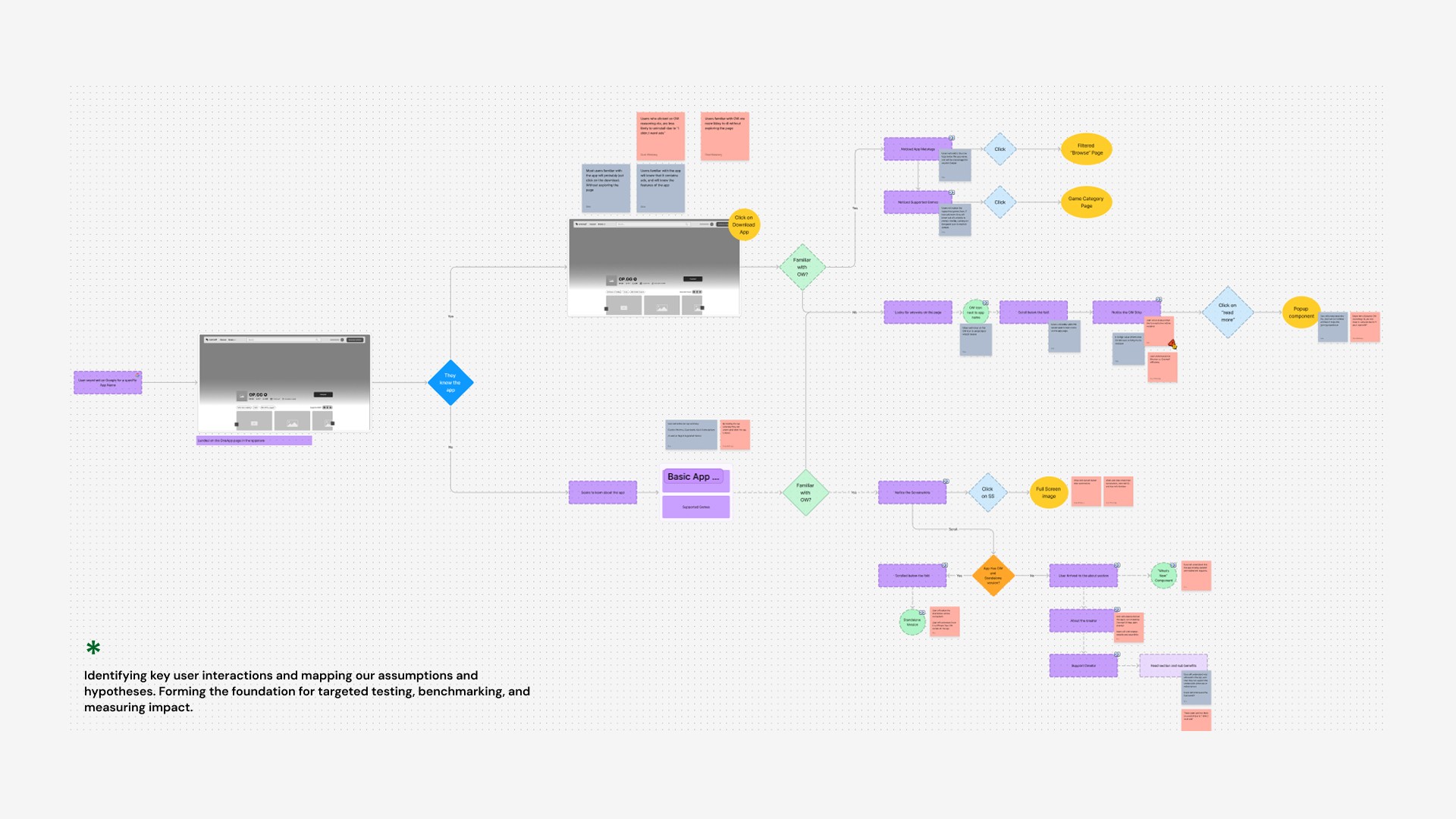
Educate first-time users in context
The Problem
First contact was an install, not an introduction
Most users met Overwolf for the first time on a single App Page and installed without understanding the client came with it. When the platform appeared, they bounced.
Result
Fewer regretted installs
After launch, uninstalls dropped about 15 percent. This is the redesign's aggregate outcome, and this intervention is its most direct line.
What I decided
Explain the platform at the moment of decision
I brought a plain explanation of what Overwolf is and why the app needs it onto the page itself, in context at the point of install, rather than assuming the user already knew.


Put the creator on the page
The Problem
Apps looked like they were made by Overwolf, not by someone
Apps read as platform stock with no one behind them, so users had nothing and no one to trust at the moment they were deciding.
Result
Positive signal from partners
Partner creators responded well to being made visible. Qualitative.
What I decided
Make the creator visible
I put the creator on the page: their ownership of the app, and the wider ecosystem around it, so the page reads as something made by a real team rather than a faceless listing. Appstore credibility comes from showing ownership.


Reflection
Conversion was never the problem, which is why it almost stopped the work from happening. The page was good at getting people to install and bad at making sure the right people did. The redesign only made sense once we judged the funnel by who stayed instead of who clicked. It also moved design from executing decisions to making the strategic case for them.The biggest design challenge wasn’t the interface. It was proving that the right success metric was downstream from the one everyone was watching.
More projects.
Check out the rest of the featured proojects I've worked on.


